Blue Team: The Silent Defenders of Cybersecurity

Every day, we check emails, shop online, make payments, and log into websites without thinking much about what's happening behind the scenes. These conveniences have also created more opportunities for cybercriminals — phishing emails, malware, ransomware, and data breaches are now routine, making cybersecurity more critical than ever.
When people picture cybersecurity, they usually picture hackers trying to break in. But there's another side working quietly to stop those attacks before they cause damage: the Blue Team. They monitor systems, investigate suspicious activity, and respond to security incidents to keep an organization's digital environment safe.
What Is a Blue Team?
A Blue Team is a group of cybersecurity professionals responsible for protecting an organization's systems, networks, and data from cyber threats. Unlike ethical hackers or penetration testers — who look for weaknesses by attacking systems in a controlled environment (that's the Red Team) — a Blue Team focuses purely on defense.
Most Blue Team members work inside a Security Operations Center (SOC), monitoring alerts, reviewing logs, and investigating suspicious activity. Since security tools generate huge volumes of alerts daily, one of their core skills is triage — deciding whether an alert is a real threat or a false positive.
Their job doesn't end once an incident is handled. They also trace how the attack happened, tighten security controls, patch vulnerabilities, and update detection rules to prevent repeat attacks.
Why Does a Blue Team Matter?
Organizations store valuable data — customer records, employee details, financial data, business documents. If that's compromised, the fallout goes beyond financial loss: customer trust, operations, and reputation all take a hit.
A Blue Team reduces that risk by catching suspicious activity early — unusual login attempts, phishing emails, unexpected network behavior — before it becomes a full-blown incident.
Key Concepts Every Blue Team Should Know
| Concept | What It Does |
|---|---|
| SOC (Security Operations Center) | The central hub for monitoring, investigating, and responding to threats — often staffed 24/7 |
| SIEM (Security Information and Event Management) | Collects logs from every system into one place so analysts can spot anomalies fast |
| Log Analysis | Reviewing system logs — the digital record of every action — to reconstruct what happened |
| Incident Response | The process of identifying, containing, removing, and recovering from a security incident |
| Threat Hunting | Proactively searching for hidden attackers that automated tools missed |
| MITRE ATT&CK Framework | A knowledge base of real attacker techniques, used to build better detection rules |
Tools Used by a Blue Team
Blue Teams lean on a stack of tools to make monitoring and investigation manageable:
- SIEM platforms — Splunk, IBM QRadar, Microsoft Sentinel, Wazuh — centralize logs from across the environment
- EDR (Endpoint Detection and Response) — Microsoft Defender for Endpoint, CrowdStrike Falcon — catch malware and ransomware on endpoints
- Firewalls, vulnerability scanners, and threat intelligence platforms — add extra visibility into the environment
Tools make the job faster, but they don't replace human judgment — it's the analyst's experience that turns a raw alert into a real investigation.
A Real-World Example: Phishing Response
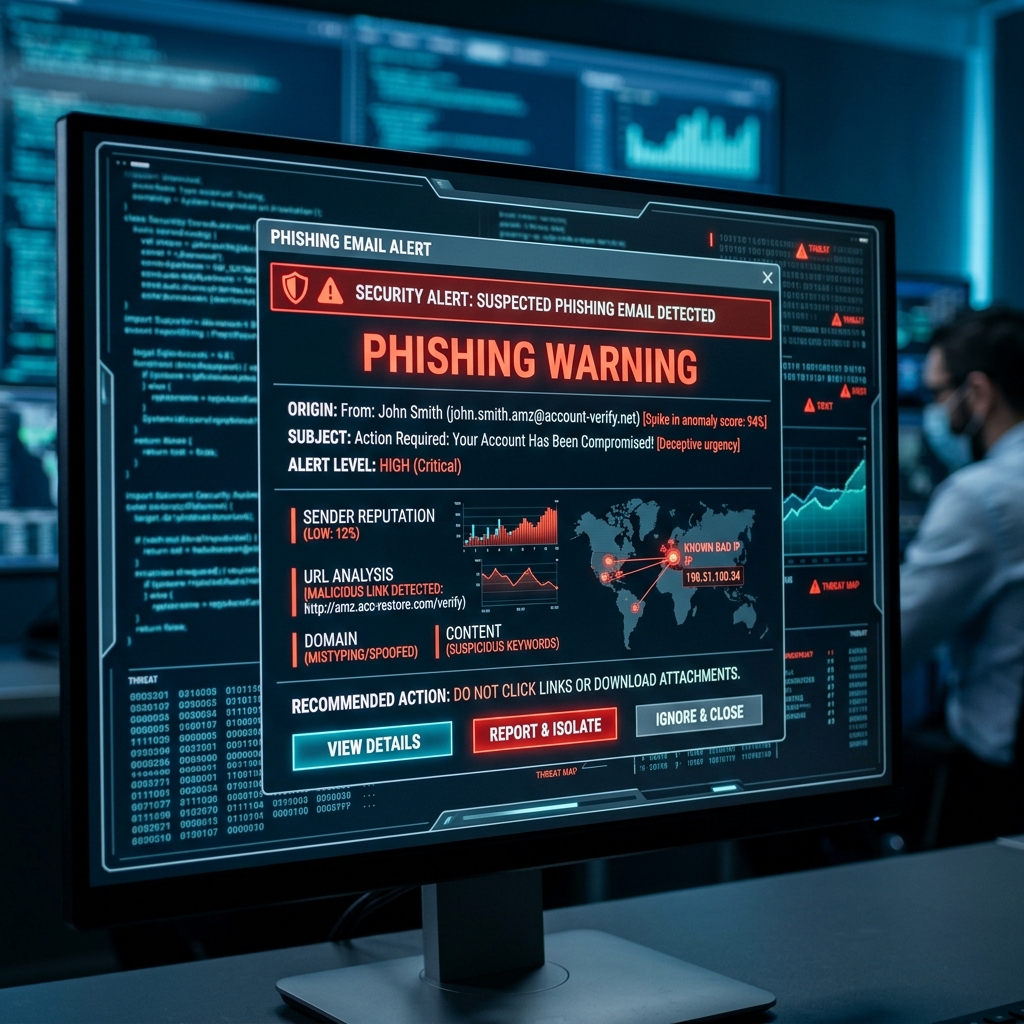
One of the most common threats a Blue Team handles is phishing. It usually starts with an email that looks completely genuine — asking an employee to "verify an account" or open an attached document. The employee clicks, and unknowingly hands over their login credentials.
Soon after, the Blue Team spots unusual login activity through its monitoring tools. Rather than treating it as just another alert, the team investigates the user's recent activity and pulls the relevant logs. Once the compromise is confirmed, they block the suspicious access, reset credentials, and check whether the attacker touched any other systems.
Then comes the follow-up: figuring out how the phishing email slipped past existing controls, and updating detection rules so it's harder next time. That's the real job — not just responding to incidents, but learning from them.
Best Practices
A strong Blue Team is built on preparation, not reaction:
- Keep systems patched and remove unnecessary access before attackers can exploit gaps
- Review logs and alerts regularly to catch issues while they're still small
- Keep learning — threat techniques evolve constantly, and defenders have to keep pace
- Treat security as a shared responsibility — employees who can spot phishing and use strong passwords cut risk significantly across the whole org
Conclusion
A Blue Team's work often goes unnoticed, because most people only see the result: a secure, reliable environment. Behind the scenes, they're monitoring, investigating, responding, and constantly tightening defenses.
As threats keep evolving, that role only gets more important. With the right skills, tools, and mindset, Blue Teams are what keeps organizations — and the people whose data they hold — one step ahead.